
Madhushravani: Mithila Monsoon Festival
Learn about Madhushravani, a vibrant 15-day monsoon festival celebrated by newly married Maithil women in Sawan, honoring Goddess Gauri and serpent deities.

Madhushravani is a vibrant 15-day monsoon festival celebrated by newly married Maithil women in the Mithila region during the Hindu month of Sawan. It honors Goddess Gauri and serpent deities to pray for a long, happy married life. This sacred period coincides with the arrival of heavy monsoon rains, transforming the landscape of North Bihar into a lush green sanctuary.
Naihar, Bharo & Sasural Traditions
According to ancient traditions, this festival is celebrated at the bride's parent's house, known as Naihar. A unique highlight is the active role of the groom's family (Sasural)—they send all necessary worship items, new bridal clothes, and fruits daily, a custom known as Bharo. This strengthens the bond of affection and goodwill between the two families.
Phool Lodhi & Traditional Songs

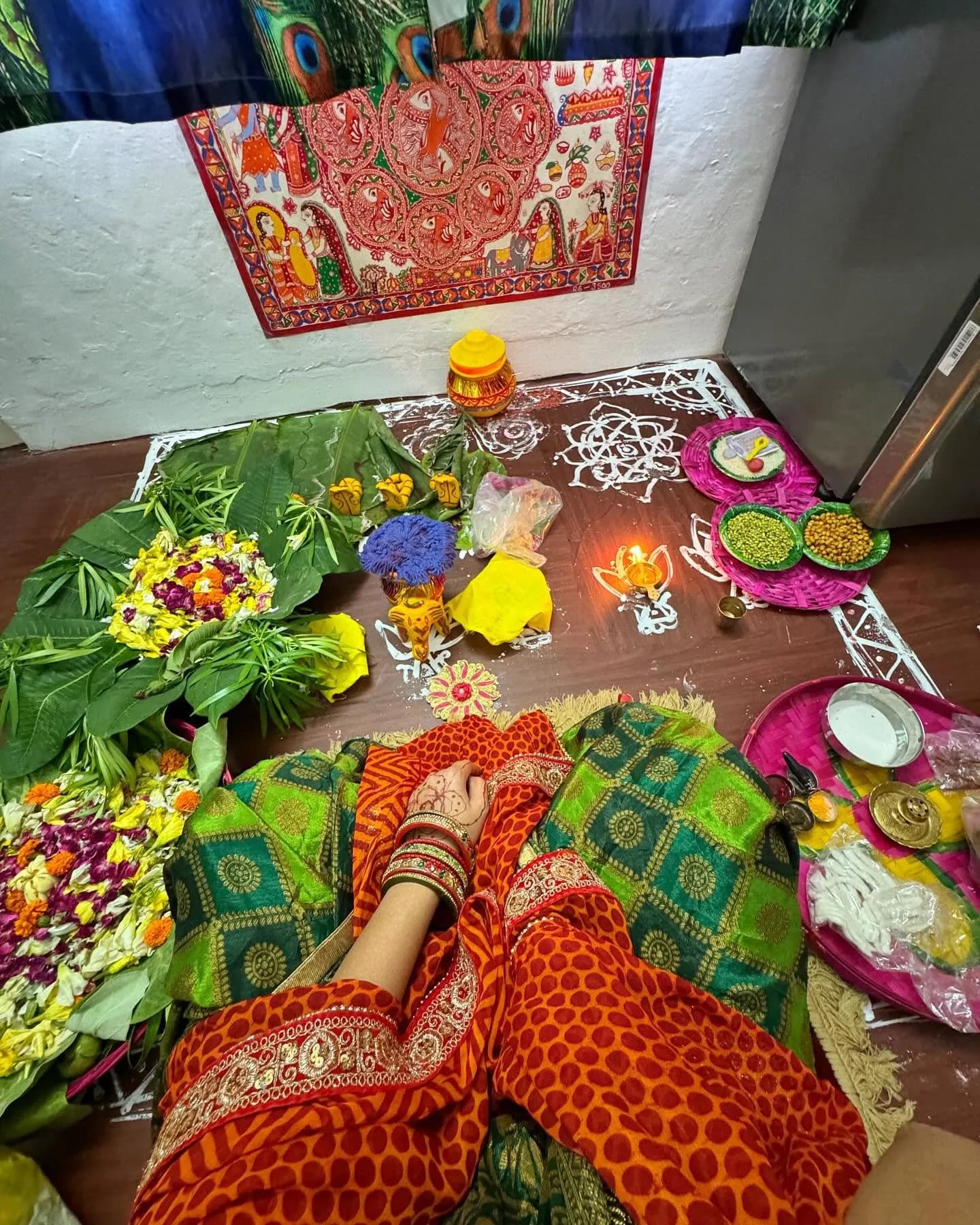
Each morning, the bride wears her traditional bridal Mithila Heritage Clothing and visits gardens with friends to collect seasonal flowers like marigolds, roses, and the local *cheera-meera* flower, placing them in bamboo baskets. To celebrate the ritual of flower collection, the women sing a traditional folk song.
Sakhi phool lodhe gailon phulwariya Sang me saheliya na Koi beli phool lodhe, koi chameli phool lodhe Koi lodh laye champa ke kaliya Sang me saheliya na Koi Ram var mange, koi Shyam var mange Koi mang lelehan bhangiya bhikhariya Sang me saheliya na
In this traditional song, Lord Shiva is fondly referred to as *bhangiya bhikhariya* (the ascetic beggar), reflecting the intimate and playful relationship Maithils share with the deities.
Clay Idols & the Bidhkari Stories
During the puja, the bride worships idols of Shiva-Parvati and the snake goddess Bisahari (believed to be Shiva's manas putri), handcrafted out of raw soil. A senior woman of the family, known as the Bidhkari, narrates traditional mythological stories and serpent legends. This sacred ritual is performed in the Kohbar room surrounded by aesthetic Madhubani paintings.
The Temi Ritual & Bhandara Feast
On the final day, the *Temi* ritual is performed where a small burning cotton wick is lightly touched to the bride's knees to symbolize endurance. To maintain purity, the bride follows a restrictive saltless diet, utilizing authentic Mithila Pooja Items for worship. The festival concludes with a grand community feast known as Bhandara organized by the bride's family and villagers, celebrating social cohesion.
📚 Cultural Dictionary & Key Terms
- Naihar
- The bride’s maternal home or parent’s house, where traditional customs require newlywed Maithil brides to return to celebrate this festival.
- Bharo
- A crucial custom where the groom’s family daily sends essential ritual objects, bridal attire, fruits, and offerings to the bride’s home during the festival.
- Bidhkari
- A respected senior woman of the family or village who serves as the narrator, recounting traditional folk stories and legends of Shiva, Parvati, and serpent goddesses.
- Cheera-Meera
- A seasonal wild flower native to the wetlands of the Mithila region that blooms in late monsoon (July/August) and is collected daily for the rituals.
- Bhandara
- A grand community feast organized on the final day by the bride’s family and fellow villagers to celebrate the completion of the vows and social unity.
Published by
Discover Mithila
मिथिला धरोहर — Preserving Heritage